Find Lovibond Colorimeter for Lab Testing, Quality Control, and Analysis
Source 30 Lovibond colorimeter models with features like LED blue excitation and photoelectric colorimetry. Buyers can compare specifications, certifications, and delivery times from verified Chinese manufacturers.
Key considerations
Products List


$1300.00 - $1500.00
Moq: 1


Comprehensive Sourcing Guide
Strategic Sourcing Guide for Lovibond Colorimeters
Understanding the Lovibond Colorimeter Market and Core Specifications
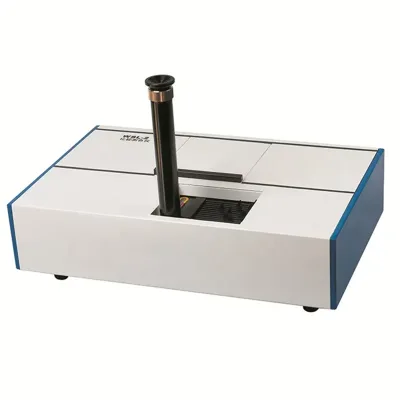
When sourcing a Lovibond colorimeter, buyers must first distinguish between the specific product families and the technical attributes that define their utility in a laboratory or industrial setting. The Lovibond brand is synonymous with precision color measurement, yet the market presents a diverse array of models ranging from portable handheld units to large-scale desktop systems. Based on available product data, the market includes models such as the WSL-2, WF28, CR-400, WSF-3B, HP200, and HP-2132, each serving distinct operational needs. A critical observation in the current supply landscape is the variation in structural design; while some units are explicitly categorized as "Desktop" structures suitable for fixed laboratory benches, others may be designed for portability or integration into larger automated systems.
The technical specifications of these instruments vary significantly based on their intended application. For instance, the observed product attributes indicate that certain models utilize "LED Blue Excitation" as their light source, a feature critical for specific photoelectric colorimetry applications where stability and energy efficiency are paramount. In contrast, other units may rely on different power sources, with data showing options ranging from AC220V±22V to AC220V, suggesting that buyers must verify the electrical compatibility of the unit with their local grid infrastructure. The display mechanisms also differ, with some models featuring "Digital" displays for precise numerical readouts, while others may utilize "Needle" displays, which are often found in analog or semi-analog systems.
Furthermore, the performance capabilities of these devices are defined by their analysis methods. The primary function observed in the current inventory is "Photoelectric Colorimetry," which allows for the quantification of color differences based on light absorption and transmission. This is distinct from visual comparison methods, offering higher repeatability and data logging capabilities. Buyers should note that the "Minimum Reading" for certain models is specified as 0.1, a metric that directly impacts the resolution and sensitivity of the color measurement. Additionally, the "Magnification" factor, observed at 1.9X in specific listings, indicates the optical power available for viewing samples, which is particularly relevant for tasks requiring detailed visual inspection alongside digital measurement.
Compliance, Certification, and Regulatory Standards
Navigating the regulatory landscape is a non-negotiable aspect of sourcing industrial colorimeters. Compliance ensures that the equipment meets international safety and quality benchmarks, which is essential for maintaining accreditation in laboratory settings. The supply data confirms that several models carry the "CE" certification, a mandatory conformity mark for products sold within the European Economic Area. This certification indicates that the manufacturer has assessed the product and meets EU safety, health, and environmental protection requirements. However, the presence of CE marking alone does not guarantee compliance with all local regulations; buyers must verify if the specific model they are purchasing is certified for their specific region of operation.
Beyond the CE mark, the data highlights adherence to "ISO 9001" standards, which relate to quality management systems rather than the product itself. Some listings explicitly state "ISO9001 and CE Certificate" or "ISO 9001 confirmed," suggesting that the manufacturing facility operates under a certified quality management framework. This is a strong indicator of process consistency, though it does not directly certify the performance of the individual colorimeter unit. Buyers should be cautious not to conflate the manufacturer's ISO 9001 status with product-specific certifications like ISO 17025, which relates to the competence of testing and calibration laboratories. While ISO 17025 is a relevant standard for calibration labs, the provided data does not explicitly confirm that every listed product is ISO 17025 compliant; therefore, buyers must request specific calibration certificates from the supplier to verify this capability.
The "prod_standard" field in the product data also reveals physical dimensions, such as "1996890mm," which serve as a standard reference for the physical footprint of the device. While this is a dimensional specification rather than a regulatory standard, it is crucial for laboratory planning. Additionally, the "Accuracy Grade" is noted as "Control:Manual Control" in some contexts, which implies a level of user intervention required for operation. This distinction is vital for facilities aiming for full automation, as manual control systems may introduce variability in long-term testing. Buyers must ensure that the certification documents provided by the supplier are current and issued by recognized bodies, as the mere mention of a standard in a product description does not constitute proof of compliance.
Cost Drivers and Pricing Dynamics
The pricing structure for Lovibond colorimeters and similar analytical instruments is influenced by a complex interplay of technical specifications, customization options, and supply chain factors. The observed price range in the market spans from $109 to $3,750 USD, a wide disparity that reflects the difference between basic entry-level units and high-end, specialized systems. The lower end of this spectrum likely corresponds to simpler models with basic digital displays and standard power requirements, while the upper end encompasses units with advanced features such as automation, specialized light sources, and robust build quality.
One of the primary cost drivers is the level of customization available. The product data explicitly lists "Customization: Available" and "Customized" as attributes, indicating that buyers can request tailored solutions. Customization can significantly impact the final price, as it involves additional engineering, tooling, and production time. For example, a buyer requiring a specific "prod_packing" solution, such as a "Carton or Customized" package versus a standard "Carton" or "Wooden Case," may incur different costs. The "Wooden Case" option, often associated with heavy-duty or high-value equipment, typically adds to the overall expense due to the materials and labor involved in its construction.
Another significant factor is the delivery time and logistics. The data shows varying delivery times, with some suppliers offering "7 Days After Recieving The Payment" and others stating "in 20 Days After Receiving Payment." These lead times can affect the total cost of ownership, particularly if the buyer requires urgent deployment. Faster delivery often commands a premium, while longer lead times may allow for more competitive pricing. Additionally, the "MOQ" (Minimum Order Quantity) is observed to be as low as 1, which suggests that the market is accessible for single-unit purchases without the need for bulk buying. This flexibility is beneficial for small laboratories or pilot projects but may result in higher per-unit costs compared to bulk orders.
The weight and physical specifications of the unit also play a role in pricing. Models with a "Weight" of 700g are generally lighter and may use different materials compared to heavier units with a "Mass Scope of Workpiece" up to 8000kg or a "Weight" range of 0-100Kg. The latter suggests that the product category includes not just the colorimeter itself but potentially larger testing rigs or integrated systems. Buyers should carefully evaluate whether they need a standalone colorimeter or a larger system, as the latter will naturally command a higher price point.
Typical Applications and Operational Environments
The versatility of Lovibond colorimeters makes them suitable for a wide range of applications, primarily within laboratory and industrial settings. The "Application" field in the product data explicitly identifies "Lab" as a primary use case, indicating that these instruments are designed for controlled environments where precision is critical. However, the "Function" attributes, such as "Cleared" and "Storage," suggest that these devices may also be used for sample preparation and data management tasks within the lab workflow.
In the context of material testing, the "Loading Method" and "Load Way" attributes provide insight into the broader capabilities of the equipment. Some models are designed for "Static Load" or "Mechanical Load" applications, which implies that they can be integrated into larger testing systems for evaluating the physical properties of materials. The "Max Diameter of Workpiece" of 1800mm and "Mass Scope of Workpiece" of 8000kg indicate that the product ecosystem includes large-scale testing equipment, which may be used in conjunction with colorimeters for comprehensive material analysis.
The "Performance" attribute, listed as "Automation," highlights the trend towards automated testing processes. Automated colorimeters can reduce human error, increase throughput, and ensure consistent results over long periods. This is particularly valuable in high-volume production environments where rapid quality control is essential. The "Frequency" of 50±1HZ suggests that these units are designed to operate on standard industrial power frequencies, ensuring compatibility with global power grids.
Furthermore, the "Oil Cylinder Position" being "Under" in some models points to specific mechanical designs that may be relevant for hydraulic or pressure-based testing systems. While this may seem unrelated to colorimetry, it underscores the complexity and integration capabilities of the broader product line. Buyers should consider how the colorimeter fits into their existing workflow, whether it is a standalone unit for spot checks or part of an automated line for continuous monitoring.
Supplier Evaluation and Geographic Considerations
When evaluating suppliers for Lovibond colorimeters, geographic location and origin play a significant role in logistics, communication, and after-sales support. The product data indicates that the "Place of Origin" and "prod_origin" are primarily located in "Zhejiang" and "Zhengzhou City, China (Mainland)." Zhejiang is a major manufacturing hub in China, known for its robust supply chain and expertise in producing electronic and mechanical equipment. Suppliers from this region are likely to have established logistics networks and experience in exporting to international markets.
The "Brand Name" listed as "Top" in some entries suggests that there are various manufacturers or distributors operating under different brand identities. Buyers should exercise caution and verify the actual manufacturer behind the brand name, as "Top" may be a generic descriptor rather than a specific company. It is crucial to conduct due diligence on the supplier's reputation, production capacity, and history of delivering quality products.
Communication and support are also key factors in supplier evaluation. The "Customization: Available" attribute implies that the supplier is willing to engage with buyers to meet specific requirements. This level of engagement is a positive sign, indicating a customer-centric approach. However, buyers should ensure that the supplier has the technical expertise to support the customization process, from design to final delivery.
Additionally, the "Delivery Time" variations observed in the data (7 days vs. 20 days) highlight the importance of discussing timelines early in the procurement process. Buyers should clarify the factors that influence lead times, such as production scheduling, shipping methods, and customs clearance. A reliable supplier will provide transparent information about these timelines and work with the buyer to minimize delays.
Quality Control and Long-Term Procurement Considerations
Ensuring the quality of Lovibond colorimeters requires a rigorous approach to quality control (QC) and long-term planning. The "Standard" attributes, such as "ISO 9001" and "CE," provide a baseline for quality assurance, but buyers must go further by requesting detailed quality control reports and calibration certificates. These documents should verify that the specific unit meets the claimed specifications, including the "Minimum Reading" of 0.1 and the "White Board Diffuse Reflectance" of >80%.
Long-term procurement considerations include the availability of spare parts, maintenance services, and software updates. The "Battery Charging Time" of 8 hours for certain models indicates that these units may have rechargeable batteries, which will require periodic replacement or maintenance. Buyers should inquire about the lifespan of these batteries and the cost of replacements to avoid unexpected downtime.
The "prod_packing" options, ranging from "Carton" to "Wooden Case," also have implications for long-term storage and transport. A "Wooden Case" offers superior protection for heavy or sensitive equipment, which is beneficial for units that may need to be shipped frequently or stored in harsh environments. Buyers should assess their storage conditions and choose packaging that aligns with their operational needs.
Finally, the "Analysis" method of "Photoelectric Colorimetry" requires regular calibration to maintain accuracy. Buyers should establish a schedule for calibration and ensure that the supplier or a third-party service provider is available to perform these tasks. By prioritizing quality control and long-term support, buyers can maximize the value and reliability of their Lovibond colorimeter investments.
Conclusion
Sourcing a Lovibond colorimeter requires a comprehensive understanding of the technical specifications, compliance requirements, cost drivers, and supplier capabilities. By carefully evaluating the available data and adhering to best practices in procurement, buyers can select a unit that meets their specific needs and ensures long-term operational success. The diverse range of models and features available in the market offers flexibility, but it also demands a thorough due diligence process to navigate the complexities of the supply chain. With the right approach, buyers can secure high-quality colorimetry solutions that enhance their laboratory and industrial operations.
FAQs
What certifications do lovibond colorimeter models carry?
Many models carry CE certification and adhere to ISO 9001 standards. Some listings explicitly confirm ISO9001 and CE certificates, ensuring compliance with EU safety and quality management requirements for laboratory equipment.
How is the minimum reading specified for these devices?
The minimum reading for certain models is specified as 0.1. This metric directly impacts the resolution and sensitivity of the color measurement, allowing for precise quantification in laboratory settings.
Can buyers request customization for lovibond colorimeters?
Yes, customization is available for these instruments. Buyers can request tailored solutions including specific packing options like cartons or wooden cases, though this may affect the final price and delivery timeline.
Which power sources are compatible with these units?
Units typically operate on AC220V±22V or standard AC220V power sources. Buyers must verify electrical compatibility with their local grid infrastructure before purchasing to ensure safe and stable operation.
What is the typical delivery time for these products?
Delivery times vary, with some suppliers offering 7 days after payment and others stating 20 days. Faster delivery often commands a premium, while longer lead times may allow for more competitive pricing.
Where are these lovibond colorimeters manufactured?
Products originate primarily from Zhejiang and Zhengzhou City in China. These regions are major manufacturing hubs known for robust supply chains and expertise in producing electronic and mechanical laboratory equipment.